


Plantagenet Who's Who
Public Profile
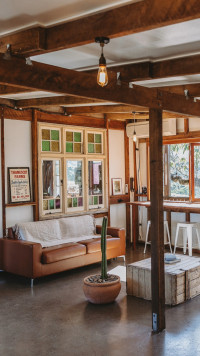
The Cromwell family farming roots go back many generations on both sides of our families, here in Australia and in Canada. Today, with the help of our daughters, Aubrey, Morley, and Bella, we manage 40 acres in the Byron Bay Hinterland using regenerative practices with a focus on unique farm stays and pasture-raised, rare heritage breeds. Our family strives to bring joy and sustainability to regenerative farming.
Our working family farm in Goonengerry offers visitors many wholesome experiences including hand-picking your own produce, interacting with our farm animals, exploring the land and buildings and of course, overnight stays.
We also offer homely getaways in the Clarence Valley - in Wooli, Ulmarra and Glenugie. Head to our website to view all our accommodation options!
Cromwell Farmstays and Getaways
The Cromwell family farming roots go back many generations on both sides of our families, here in Australia and in Canada. Today, with the help of our daughters, Aubrey, Morley, and Bella, we manage 40 acres in the Byron Bay Hinterland using regenerative practices with a focus on unique farm stays and pasture-raised, rare heritage breeds. Our family strives to bring joy and sustainability to regenerative farming.
Our working family farm in Goonengerry offers visitors many wholesome experiences including hand-picking your own produce, interacting with our farm animals, exploring the land and buildings and of course, overnight stays.
We also offer homely getaways in the Clarence Valley - in Wooli, Ulmarra and Glenugie. Head to our website to view all our accommodation options!
Connect through my public pages
Public information provided by this member.
Share this Portrait
Distinguished and Famous people from Plantagenet
🍇 Tony Smith
Tony Smith planted trial vines on his Bouverie property at Denbarker in 1968, helping establish Plantagenet Wines with two partners. Shiraz and Cabernet Sauvignon began a venture that contributed to the Great Southern’s developing wine industry. The work joined farming with a judgement about what the district’s cooler conditions could produce. Later commercial development and changes in ownership expanded the business beyond those first plantings. Smith’s connection is grounded in a particular property and practical experiment: grapes had to grow successfully before a regional reputation could be poured into a glass. The Denbarker beginning remains part of the company’s own account of its development.
⛪ George Egerton-Warburton
George Egerton-Warburton developed St Werburgh’s near Mount Barker and took a direct role in building the family chapel, consecrated in 1874. A gift from his brother in England helped furnish the interior, while local tradespeople worked on the structure. George undertook plastering and, with his sons, made ironwork in the family forge. The font had previously served as a household mortar, a strikingly practical transformation of a familiar object. The property also employed convict labour. Its buildings preserve the work and unequal relationships of a colonial estate, alongside the family’s effort to establish a local place of worship.
